JOURNAL · IN THE MASTER'S WORDS
Seal & Clerical Script: The Allure of Japan's Ancient Characters
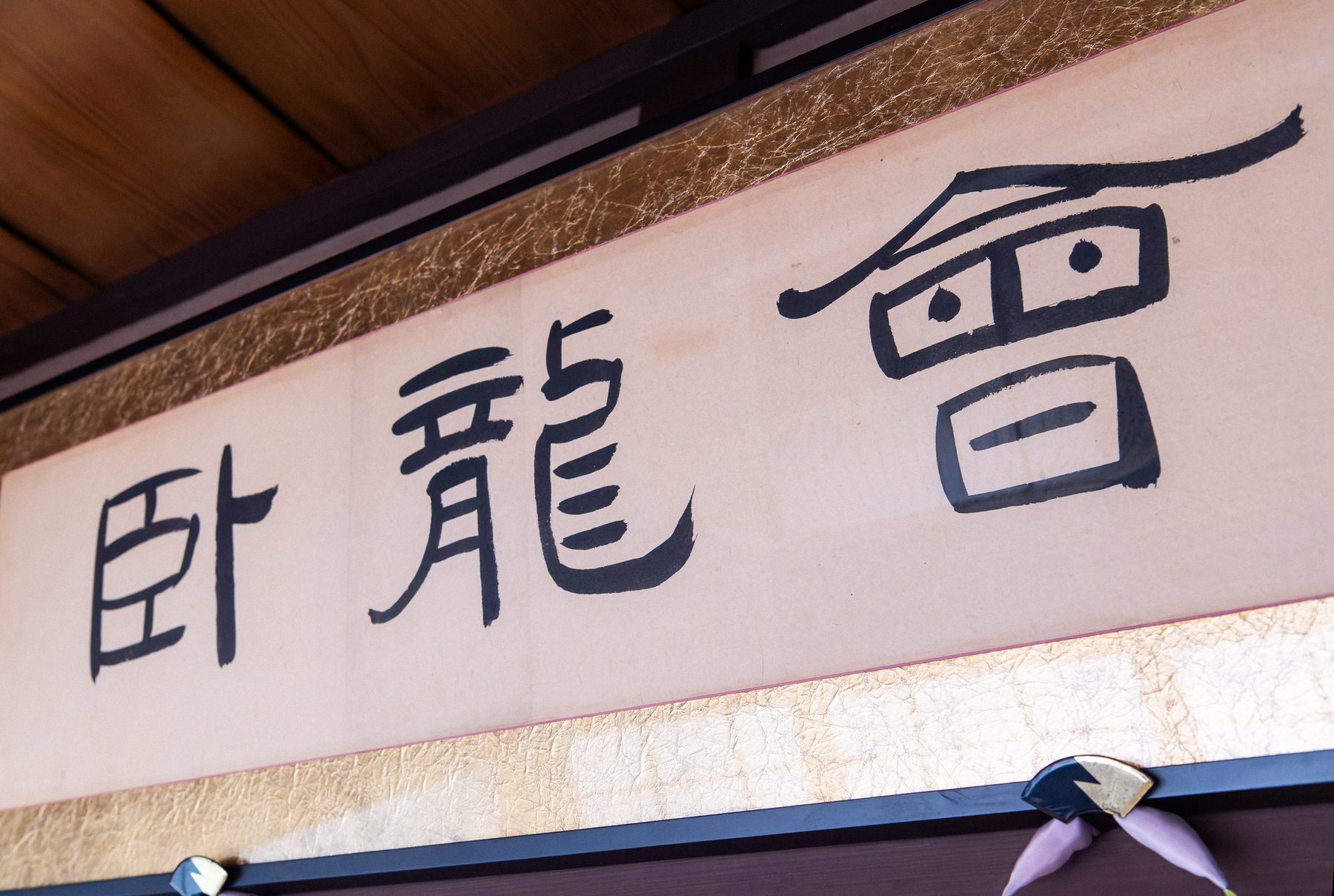
Seal and clerical script — the ancient characters — are old in age yet carry something contemporary. The form of a character at its birth is profoundly mysterious, and endlessly compelling.
Why were you drawn to the ancient scripts — seal script (tensho) and clerical script (reisho)?
My first teacher was a teacher of standard script (kaisho), and I long wrote the powerful kaisho of the Northern Wei — the votive inscriptions. Yet by my inclination since childhood I leaned toward semi-cursive and cursive, and even in kaisho my air differed a little from everyone else’s. Later, Mr. Ito began to take up seal script (tensho), and I thought, “how fascinating.” At university I had not understood tensho at all; but when he passed and I went to Arai-sensei, he was a specialist, and I learned seal script from the very start. I still remember, newly enrolled, saying “I want to work in tensho,” and being told, “that will take ten years.” I bought dictionaries, researched, copied — and was gradually drawn in. Seal and clerical script — the ancient characters — are old in age yet carry something contemporary. The form of a character at its birth is profoundly mysterious; the more I know it, the more I write it, the more inexhaustible my fascination. It has also become the perfect subject when teaching guests from abroad.
Commission a work, or get in touch
From custom calligraphy artwork and corporate workshops to calligraphy experiences for visitors to Japan — every commission can begin from the smallest inquiry. We would be glad to hear from you.
Get in touch